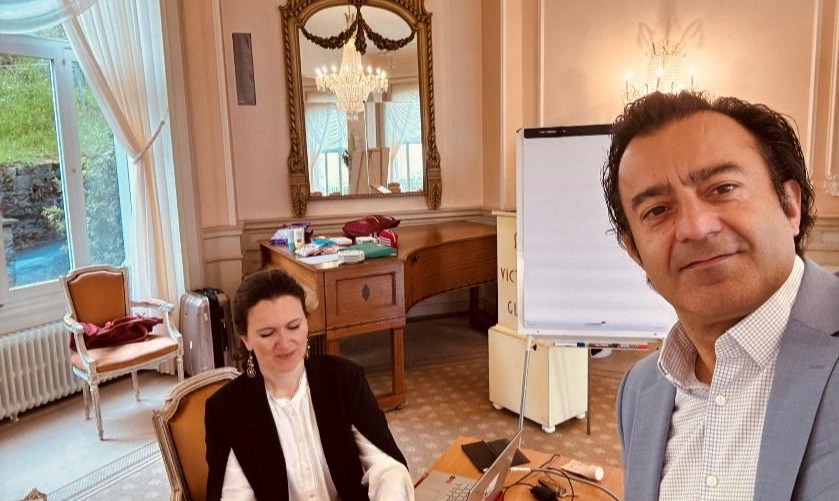
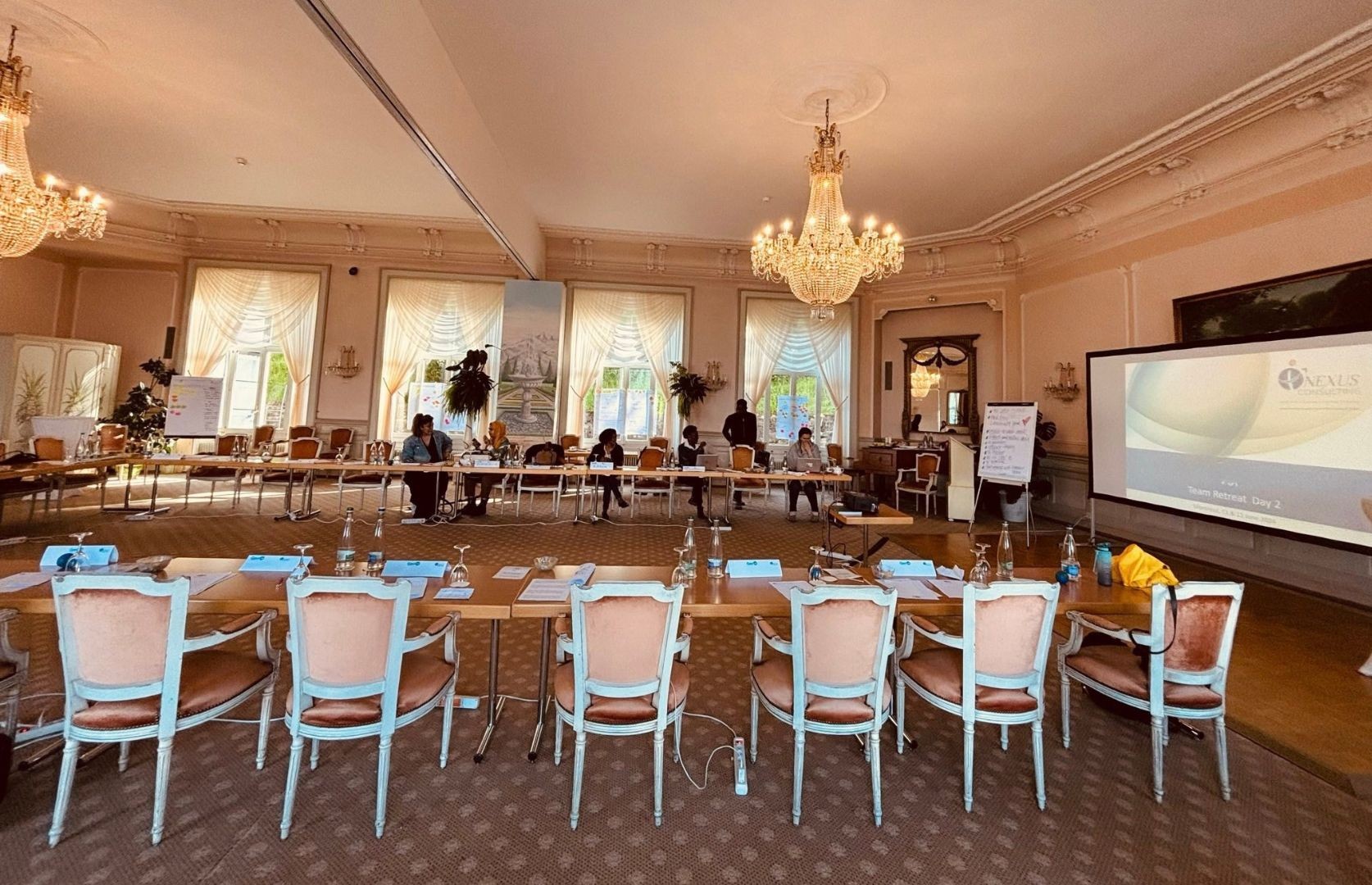
We had the pleasure of holding a team retreat with a team we have accompanied over the last three years. We will be honest: this team is a dream to work with. They are a perfect example of what we call collective performance and happiness. They deliver great results, and they genuinely enjoy working together.
It made us think. Over the years, Nexus has had the chance to collaborate with many teams across Switzerland and beyond. Some struggle, some do fine, and some truly shine. When we look back at the great ones, the teams that combine high performance and a happy team culture, we notice that they all share five specific traits.
None of these traits is about talent, budget or having the “right” people. They are about attitudes and habits that any team can develop. In this article, we share these five traits, what research says about each of them, and practical tips to help your own team grow in the same direction.
1. Willingness to learn
With great teams, you feel it from the very first minutes of a training session. Engagement is high. Participants ask questions, challenge ideas and show a genuine eagerness to learn. They are not there because they have to be. They want practical, actionable insights they can apply in their day-to-day work.
For these teams, training is more than professional development. It is an opportunity to grow both as skilled professionals and as human beings.
This attitude pays off for organisations too. According to LinkedIn’s Workplace Learning Report, 94% of employees say they would stay longer at a company that invests in their learning and development. The same research found that 56% of employees would spend more time learning if their manager suggested a course. In other words, the manager’s attitude toward learning is contagious.
How to grow a learning culture in your team:
- Make learning part of the job, not an extra. Protect a few hours per month for training, reading or experimenting. The number one reason people give for not learning at work is a lack of time.
- Share what you learn. After a training or a conference, ask the participant to share three key insights with the team in ten minutes.
- Learn from projects. At the end of each project, hold a short “lessons learned” session: what worked, what did not, what will we do differently next time?
- Lead by example. When managers openly say “I don’t know, let’s find out” or attend trainings with their team, they show that learning is valued at every level.
- Turn training into action. Close every workshop by asking each person: “What is the one thing you will apply next week?”
2. Courage to face their challenges together
Great teams are not teams without problems. Like any team, they experience occasional conflict, especially under the pressure of organisational demands, high expectations and daily challenges.
The difference is how they respond. Rather than avoiding difficult issues, the team we worked with proactively asked for training in constructive conflict management, effective feedback and emotional intelligence. This commitment did not only help them handle difficult situations better. It made them stronger and more resilient as a team.
Avoided conflict is expensive. A global study by CPP, the publisher of the Myers-Briggs assessment, found that employees spend on average 2.1 hours per week dealing with conflict, rising to 2.8 hours in the United States, which represented about USD 359 billion in paid hours. But the same study also brings good news: countries where conflict management training is common report a high share of positive outcomes from conflict, such as better understanding of others and better solutions.
In other words, conflict is not the problem. Unmanaged conflict is.
How to face challenges together:
- Name the elephant in the room. Create regular moments where the team can raise tensions openly, for example a monthly “what’s bothering us?” round.
- Separate the person from the problem. Focus discussions on facts, needs and solutions, not on personalities.
- Practise feedback as a skill. A simple structure helps: describe the situation, the behaviour and its impact, then make a request.
- Develop emotional intelligence. Help team members recognise their own emotions and those of others, especially under pressure.
- Repair quickly. After a tense moment, take time to reconnect. A short conversation over a coffee can prevent weeks of silent frustration.
3. Eagerness to steadily deliver
Consistency and accountability go hand in hand. When we reconnect with great teams for a follow-up debrief a few months after a training or retreat, we can be confident they will have meaningful progress to share: concrete achievements, or significant movement on key projects. Their commitment to steady effort and shared responsibility consistently drives results.
Google confirmed how important this is. In its famous Project Aristotle, Google studied 180 of its own teams to understand what makes a team effective. The researchers found that who is on the team mattered far less than how the team works together. They identified five key dynamics: psychological safety, dependability, structure and clarity, meaning, and impact. On dependable teams, members reliably complete quality work on time.
Dependability does not mean working longer hours. It means doing what you said you would do, so that colleagues can count on each other.
How to build steady delivery and accountability:
- Make commitments visible. At the end of each meeting, write down who does what by when, and share it with everyone.
- Start meetings with follow-up. Begin with a quick review of last time’s commitments. It creates a gentle and positive pressure to deliver.
- Keep promises small and realistic. It is better to commit to less and deliver every time than to overpromise and disappoint.
- Say early when something slips. In dependable teams, people raise problems before deadlines, not after. That requires trust, not blame.
- Plan follow-ups after every training. Learning sticks when there is a moment, a few weeks later, to share what has been applied and what results it brought.
4. Kindness to be shared
Kindness in a team is not just a “nice-to-have”. It is a powerful driver of long-term performance. When team members treat each other with respect and empathy, they create an environment where people feel valued and supported. Teams built on kindness navigate challenges better, keep their talents longer and maintain high performance over time.
Kindness is not the same as avoiding hard truths. In the great teams we work with, people can disagree strongly and give honest feedback, precisely because they know it comes from a place of respect.
The opposite of kindness has a very real cost. Professors Christine Porath and Christine Pearson surveyed 800 managers and employees in 17 industries about rude behaviour at work. Among those who had been treated uncivilly, 48% deliberately reduced their work effort, 66% said their performance declined, 78% said their commitment to the organisation declined and 12% left their job because of it. (ScienceDaily, on Porath and Pearson, Harvard Business Review, 2013)
In a high-performing team, kindness is not soft. It is smart.
How to grow kindness in your team:
- Start with the basics. Greet each other, say thank you, listen without checking your phone. Small gestures set the tone.
- Assume good intentions. When something goes wrong, ask “what happened?” before “who is to blame?”
- Check in on the person, not only on the task. A simple “How are you doing, really?” in a one-to-one can make a big difference.
- Agree on team behaviours. Define together what respect looks like in your team, in meetings, in emails, in chat, and hold each other to it.
- Celebrate helpfulness. Recognise colleagues who support others, not only those who deliver the most visible results.
5. Last but not least: the fun and the laughter!
They work hard, but boy, do they play hard. Great teams do not take themselves too seriously, and they grab every occasion to have fun together: a joke in the middle of an intense workshop, a team lunch that runs a little longer than planned, a friendly competition during a team building activity, or a spontaneous celebration when a project goes live.
Fun is often seen as the opposite of serious work. In reality, it is one of the glues that hold great teams together. Laughter releases tension, makes it easier to speak up and turns colleagues into people we genuinely like working with.
Gallup’s research points in the same direction. Gallup has consistently found that having a best friend at work leads to better performance, for both women and men. For example, women who strongly agree that they have a best friend at work are more than twice as likely to be engaged (63%) as those who do not (29%). (Gallup)
Friendships at work rarely grow in meetings. They grow in shared experiences, and very often, in shared laughter.
How to bring more fun into your team:
- Plan regular moments of play. A quiz, a cooking class, an escape game, a hike: activities where everyone is on equal footing.
- Celebrate milestones. Birthdays, project launches, work anniversaries, the end of a busy season. Any good reason to come together counts.
- Let humour in. A light moment at the start of a meeting can change the whole atmosphere. Leaders who laugh at themselves give permission for others to relax.
- Include remote colleagues. Online games, a virtual coffee or a shared playlist help everyone feel part of the fun.
- Keep it inclusive. Good fun brings everyone in. Choose activities that suit different personalities, abilities and cultures.
Quick self-check: how does your team score?
Rate your team from 1 (not at all) to 5 (absolutely) on each statement:
| Trait | Statement | Score (1 to 5) |
|---|---|---|
| Willingness to learn | We regularly take time to learn and apply new skills. | |
| Courage | We address tensions and conflicts openly and constructively. | |
| Steady delivery | We do what we say we will do, and we follow up. | |
| Kindness | We treat each other with respect, even under pressure. | |
| Fun | We laugh together and celebrate our successes. |
A total of 20 or more is a great sign. Below 15, your team may benefit from some dedicated time together to strengthen these foundations.
Thank you to our inspiring teams
To all the teams we have had the chance to accompany: thank you. You inspire us every day. Working with you is always a pleasure and a joy, and you are the reason we love what we do.
The Nexus way: growing performance and happiness together
At Nexus, we believe that performance and happiness are not opposites. The best teams have both. Through our team trainings, team building days and team retreats in Switzerland and abroad, we help teams develop these five traits: we create safe spaces to learn, tools to face conflict, rituals to deliver steadily, a culture of kindness and, of course, plenty of fun along the way.
And we do not disappear after the event. Like with the team that inspired this article, we love to follow teams over time and celebrate their progress with them.
Would you like your team to become one of these great teams? Start with our Team check-up, or contact Nexus to plan a training, a team day or a retreat tailored to your team.